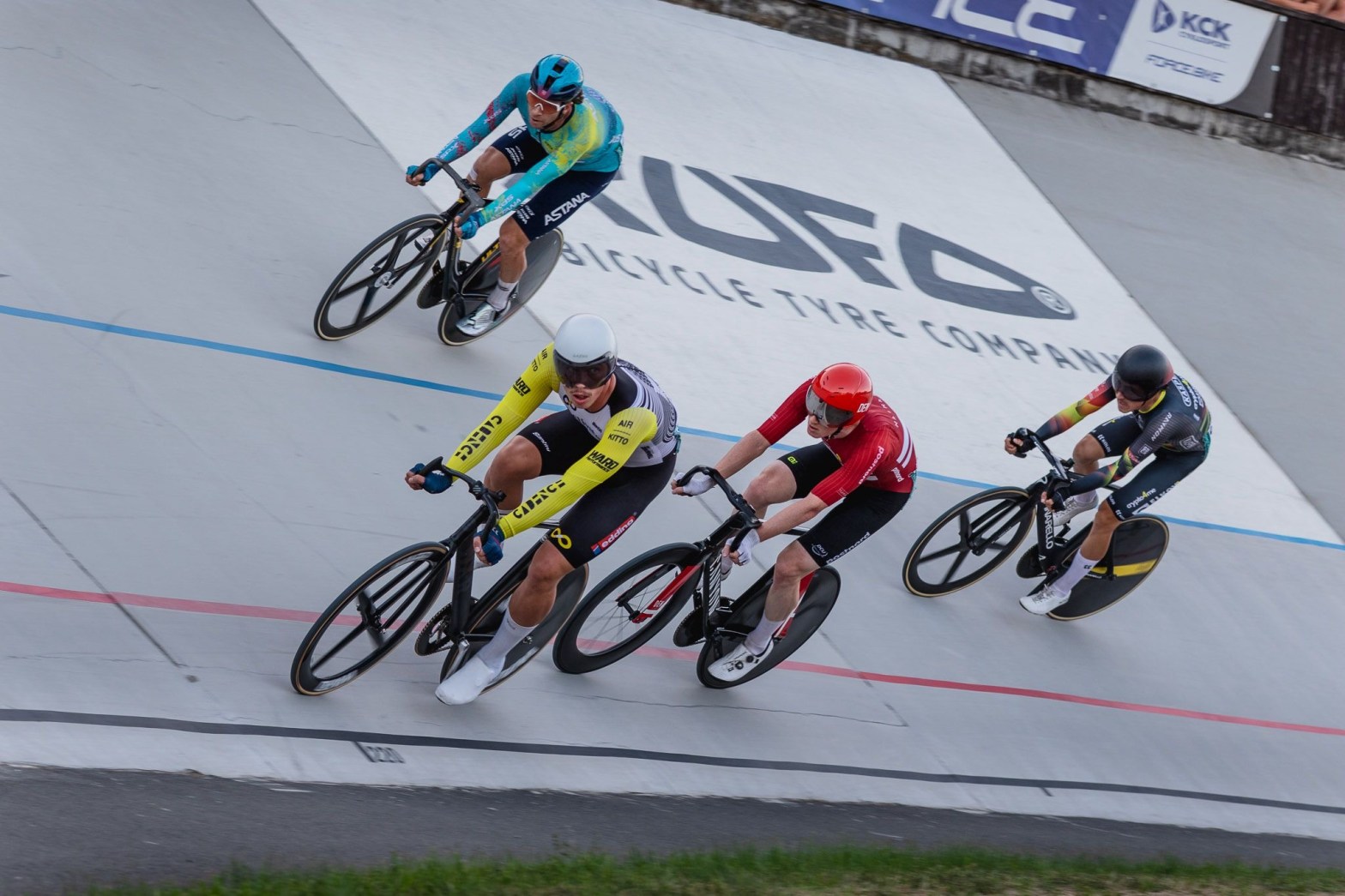
I’ve had some good results this year, but sixth place in a UCI Class 1 points race in Prostějov might be the one that means the most. That probably sounds strange. Sixth is not a podium. There is no medal and, normally, it would not be a result I would make a huge fuss about.
But this one was different.
Three Days in Prostějov
As part of the One Life Cycle team we travelled to the Czech Republic for three days of international track racing: the UCI Class 2 GP TUFO on Thursday, followed by the Class 1 Grand Prix Prostějov, Memorial of Otmar Maleček on Friday and Saturday.
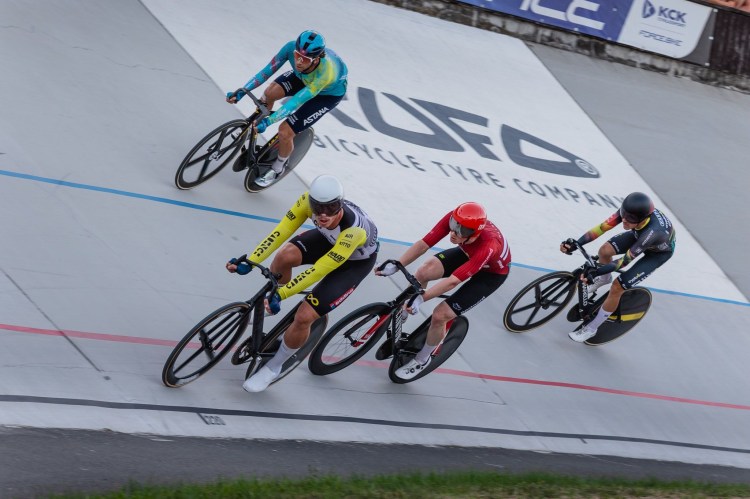
The racing took place at Prostějov’s outdoor 301-metre concrete velodrome. The track opened in 1967, although organised cycling in the city dates all the way back to 1885. It is a proper old European track: outdoors, exposed to the weather and completely different from the smooth indoor 250-metre tracks I normally race on in Britain.
The unusual length changes the feel of the racing. The straights seem to last longer, the bends arrive at different moments and the bunch does not move in quite the same way. On a 250-metre track, you get used to judging the distance between yourself, the front of the race and any riders attacking. At Prostějov, all felt slightly different.
The concrete surface added to it. It was fast, but not in the polished and predictable way of an indoor track. In fact it was as bumpy as hell. You had to concentrate, learn how the track rode and work out where you wanted to position yourself. It had loads of character and, with nearly 60 years of racing behind it, plenty of history as well.
The Class 1 meeting is held in memory of Otmar Maleček, a local rider who finished fourth in the junior world team pursuit, eighth in the junior world points race and fifth in the senior world team pursuit. After injury ended his racing career, he returned to Prostějov as a coach before sadly dying from brain cancer in 1998, aged just 31. The minute’s silence on Friday night was a poignant reminder that the meeting meant far more than UCI points and results.
A Stacked Field
The standard across all three days was ridiculous.
The start list was full of riders I’d watched at World Championships, Olympic Games and WorldTour races: Aaron Gate, Sebastián Mora, Olympic champion Lasse Norman Leth and Tim Wafler, alongside strong national teams and some of the best endurance riders in Europe.
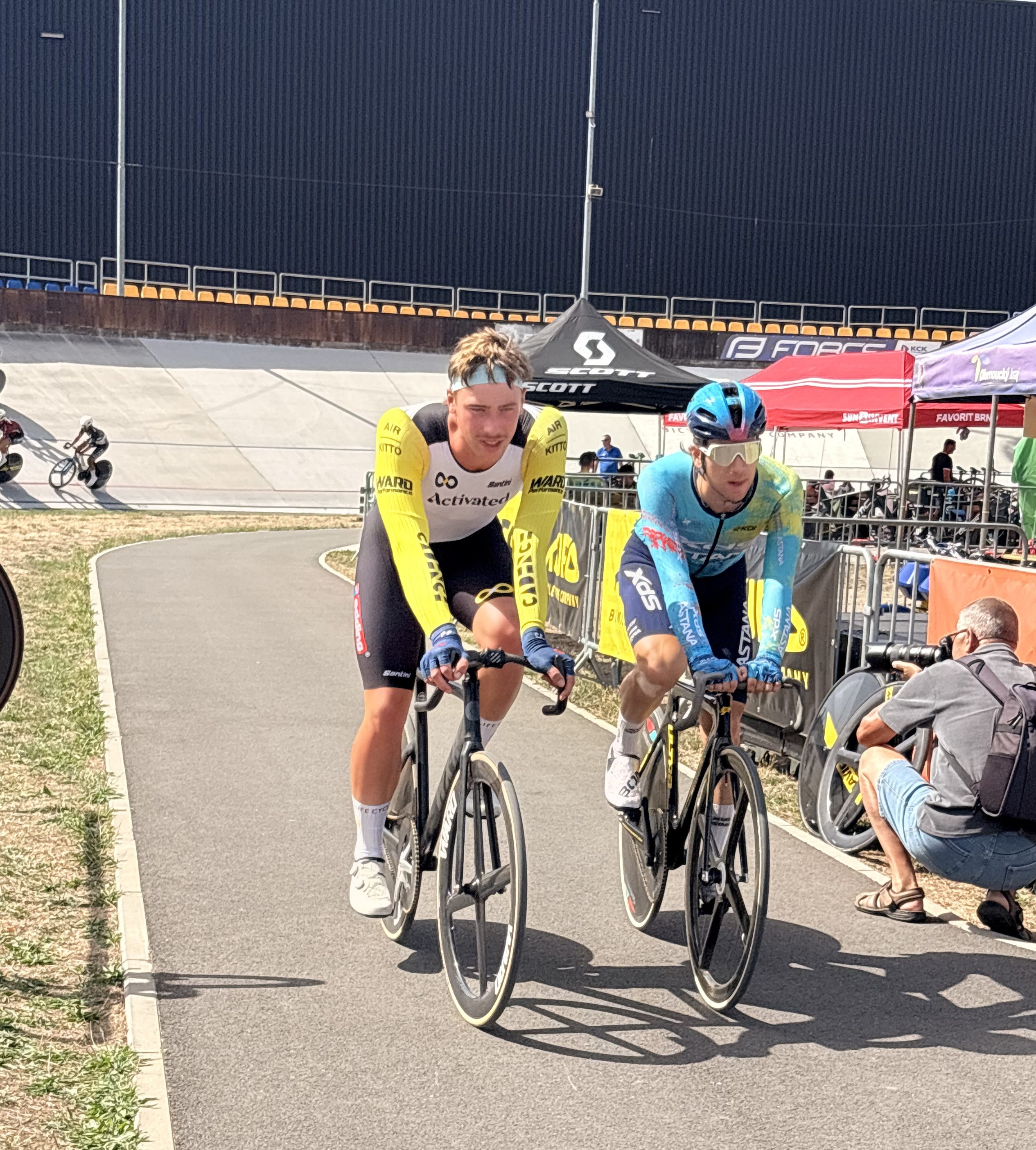
Seeing those names on a start sheet was pretty mad. Lining up next to them on the track was something else. When I was younger, I probably gave riders like that too much respect. You see the name, remember what they have won and almost feel beaten before the race has even started.
That is a dangerous way to begin any race. If you spend the first few laps watching the big names and waiting for them to decide what happens, you are already reacting. By the time you realise which move matters, it can be too late. I still had huge respect for them, but once the flag dropped, I had to race them, not just admire them. They still had to follow the attacks, make decisions and use energy like everyone else. If I wanted a result, I could not sit at the back being impressed by the riders in front of me.
The Points Race
The Class 1 points race was insane.
It was fast, aggressive and constantly changing. There was never really a moment when it settled. Every time one move was caught, another attack went, and decisions had to be made almost instantly. That is what makes a points race so difficult.
You are not simply trying to be the fastest rider. You are constantly calculating what is happening: who has scored, who has gained a lap, which riders are dangerous and whether an attack is genuinely committed or just someone wasting energy. Wait too long and the move is gone. React to everything and you will have nothing left when the move that really matters goes.
In a field like this, it would have been easy to sit in, follow the wheels and hope something happened for me later. I probably could have stayed relatively safe in the bunch and waited for a sprint.
But that was never going to be enough.
I didn’t want to finish knowing I had simply survived. If I was going to get beaten, I wanted it to be because I had raced properly. Fortune favours the brave.
A move began to roll off the front. Aaron Gate was in it, along with Frederik Rodenberg Madsen, the Danish rider involved in that memorable collision with Charlie Tanfield during the team pursuit at the Tokyo Olympics.
The important thing was not just that two huge names were in the move. It was the way they were riding. It did not look like a speculative attack that would disappear after half a lap. There was commitment. The gap was beginning to open and the riders behind were hesitating.
That looked like the move to be in.
For a moment, I had a decision to make. Riding across would require a massive effort, and there was no guarantee I would get there. Even if I did, the group might not work or the bunch could bring us straight back. But if I hesitated, the opportunity would be gone.
So I committed.
I gave everything to get across. Once I made contact, there was no time to recover or congratulate myself. I had to start working immediately. If I missed turns or looked like a passenger, the others had no reason to keep me there. We worked well together and began building the gap.
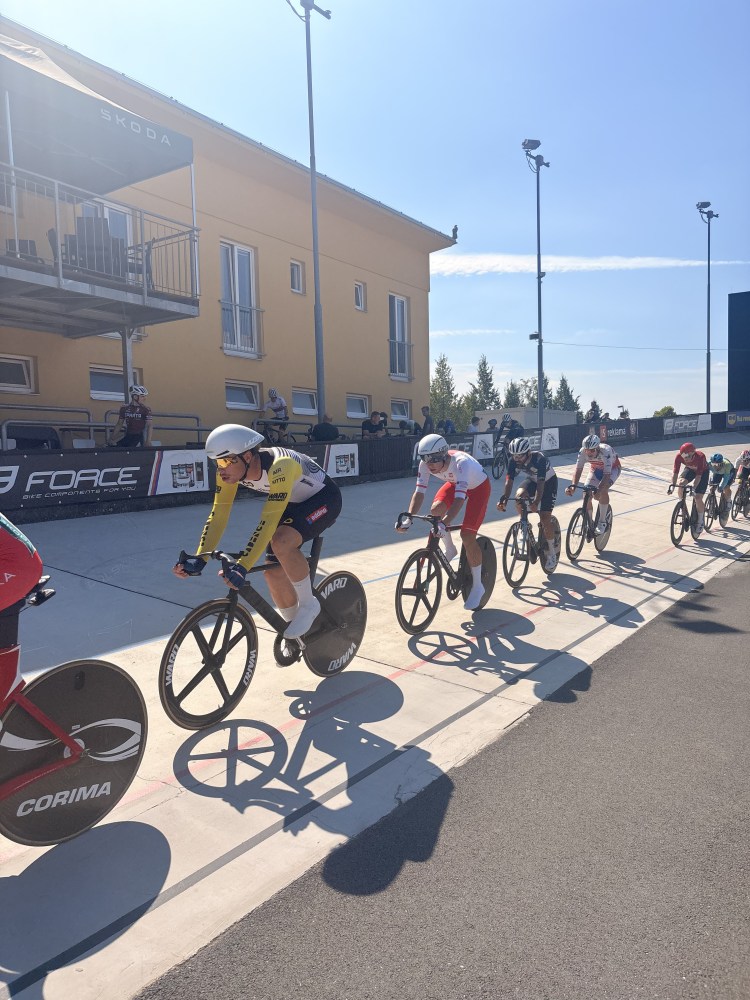
That was probably the point when the names stopped mattering. I was not thinking about Olympic medals or world titles. I was thinking about holding the wheel, taking my turn and keeping the move moving. We collected sprint points and continued pushing for the lap. The bunch was still in front of us, close enough to see but far enough away to make every turn hurt.
Eventually, we made the catch. Lap gained.
Suddenly, with 70 laps remaining, I was sitting fourth in a UCI Class 1 points race.
Staying in the Race
Taking a lap had put me in a brilliant position, but it had also cost a huge amount of energy. There were still 70 laps to race and some of the best riders in the field were not going to accept the result as it stood. The race could change again in seconds.
From there, the challenge was different. I had been aggressive to get myself into fourth. Now I needed to stay calm enough to protect it. That did not mean sitting at the back and hoping for the best. It meant watching the riders around me, reacting to the crucial moves and trying to collect more points without wasting energy on every attack.
The temptation in a points race is to chase anything that moves. But after gaining a lap, I had to be more selective. I needed to identify which attacks could change the overall standings and which ones I could afford to let go.
That sounds straightforward when written down. It is much harder when the race is full gas, your legs are hurting and riders are attacking from different parts of the track. The race never properly settled. Attacks continued to go, riders kept fighting for laps and every sprint created another opportunity for someone to change the standings.
I stayed involved and kept racing.
I could feel the effort of gaining the lap, but I was still in the contest. I tried to hold my position, follow the right wheels and pick up points where I could.
Eventually, I crossed the line in sixth.
A One Life Podium
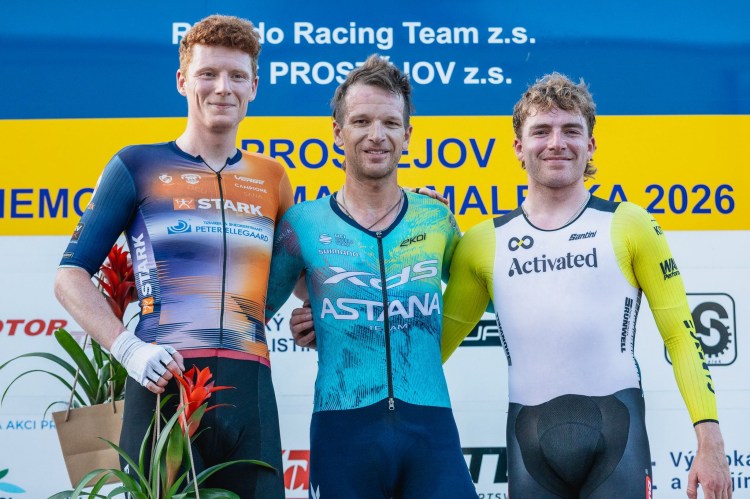
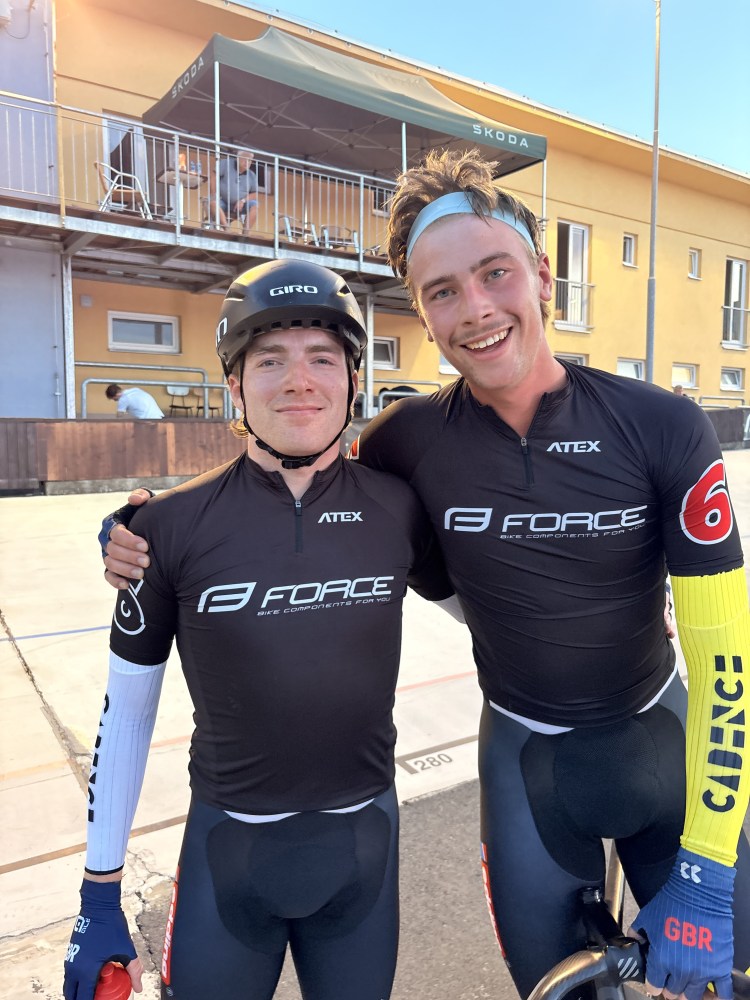
My One Life Cycle teammate Logan MacLean produced a brilliant ride to finish third, putting One Life on the podium in a seriously high-quality international field.
That was massive for Logan and for the whole team.
One Life is competing against national programmes and riders supported by some of the biggest organisations in cycling. To put a rider on the podium, while I finished sixth, showed that we were not there simply to make up the numbers.
Seeing Logan up there made it an incredibly special points race for both of us.
More Than Sixth
The result sheet will simply say:
6th – William Gilbank
It cannot explain the decision to follow the move. It cannot show the effort required to ride across, the work needed to gain the lap or the calculations being made while the race continued to change around me. And it cannot really explain why the result meant so much.
But I’ll try.
This season has been a long road back. Illness took away most of my winter and, after working hard to rebuild my fitness, I fractured my shin at the CiCLE Classic in June. That meant stopping, recovering and starting again.
There have been moments this season when I have felt things beginning to return. BUCS showed that the form was still there. Racing in Ghent gave me more international experience. Gradually, I began to find some rhythm again. But Prostějov felt like something more.
It was not simply a sign that I was getting back to where I had been. It felt as though I had taken a step forward. I was not hanging on in a race containing world champions, an Olympic champion and a WorldTour professional. I had recognised an important move, committed to it and raced my way into contention.
That was the breakthrough.
There is a big difference between having the physical ability to compete at this level and genuinely believing you belong there. Sometimes the legs arrive before the confidence does. In Prostějov, it felt like the two finally came together.
One result does not complete a journey, and sixth place is certainly not where I ultimately want to finish. But sometimes a result gives you something more valuable than a medal. It confirms that the work is taking you in the right direction. It proves that you can make good decisions under pressure and shows what might be possible if you keep putting yourself into the race.
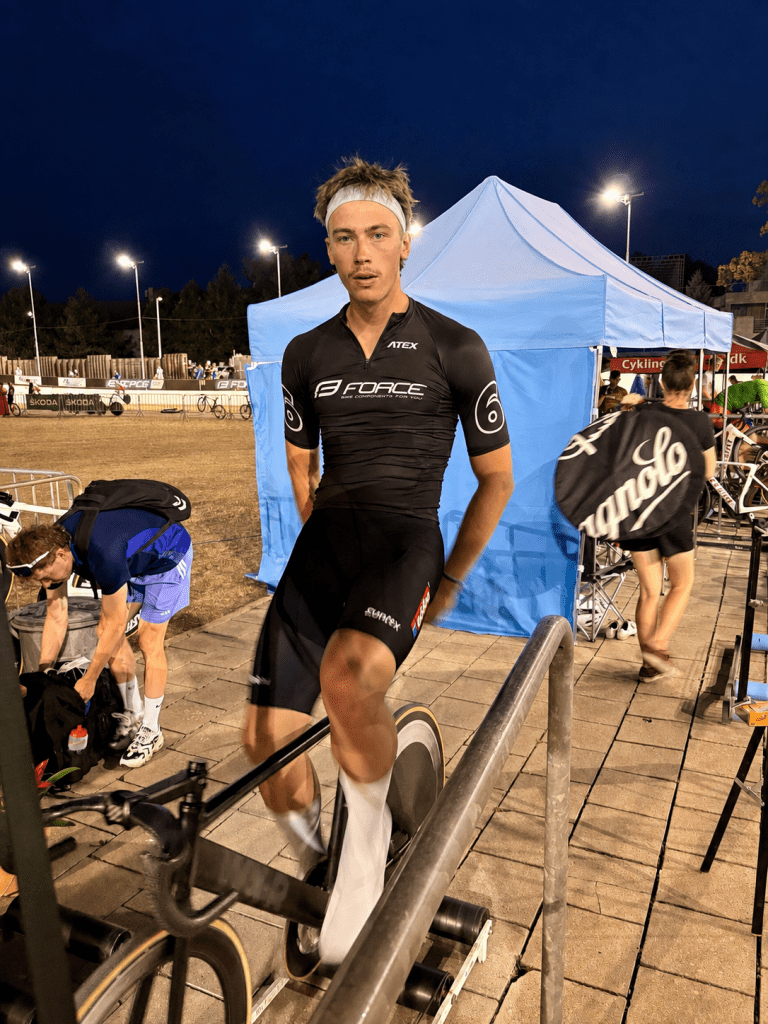
That is what Prostějov gave me. I arrived hoping I could compete with riders of this quality. I left knowing I belonged in the race.
A massive thank you to everyone at One Life Cycle, my sponsors; Highway Cycles, Matts Auto Repair Services, Pedal Potential, my coach Max, Loughborough Cycling Academy and everyone who continues to support me through the good results, the injuries and all the work that happens between races.
There is still a long way to go.
But fortune favours the brave.

